



+220 373 7757


At Bamboo Foundation Gambia, we work on the problems that quietly shape everyday life in Gambia—the kind that hit families first: waste that never gets collected, income that never becomes stable, land that becomes less productive, and climate pressure that makes everything harder.
This hub page is the overview. Each topic is intentionally short and solution-oriented. We introduce what’s happening, why it matters, and the direction we take—so private donors and CSR partners can quickly see where support creates real-world impact.
We don’t treat these issues as isolated topics. We treat them as connected realities and build programs that are designed to work in real life:
Community-led: participation is earned by relevance and trust, not forced by campaigns.
Practical first: small systems that work beat big promises that collapse.
Measurable: actions, outputs, and progress can be tracked and reported credibly.
Scalable: pilots are built to expand with the right partners, governance, and funding.

Your support helps turn bamboo, skills, and community action into cleaner places and real opportunities in The Gambia.
Together we can fund nurseries, training, and follow-up care — the practical steps that create lasting impact.

By reducing plastic pollution and strengthening livelihoods, we restore land, protect water, and grow a future that regenerates.

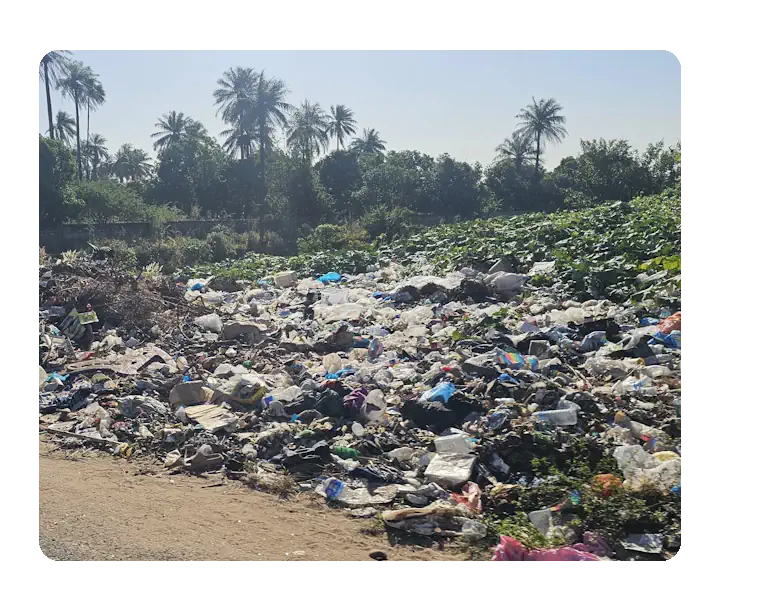

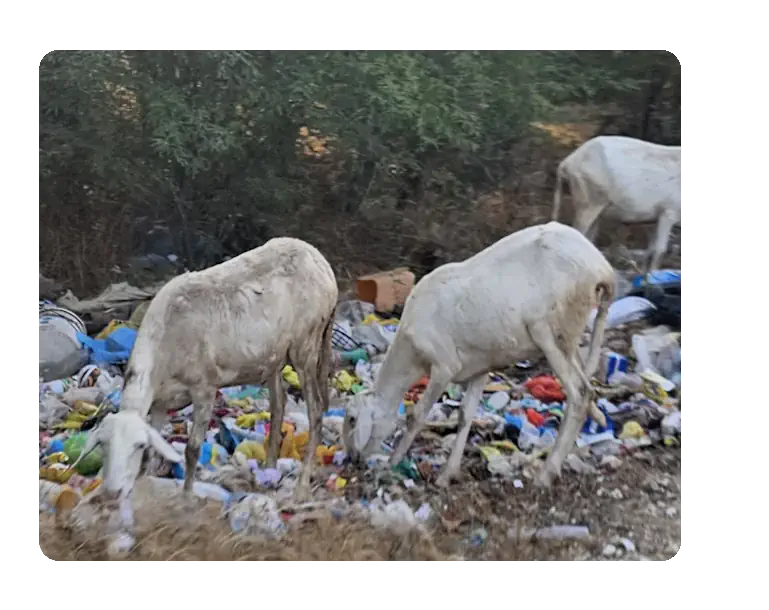
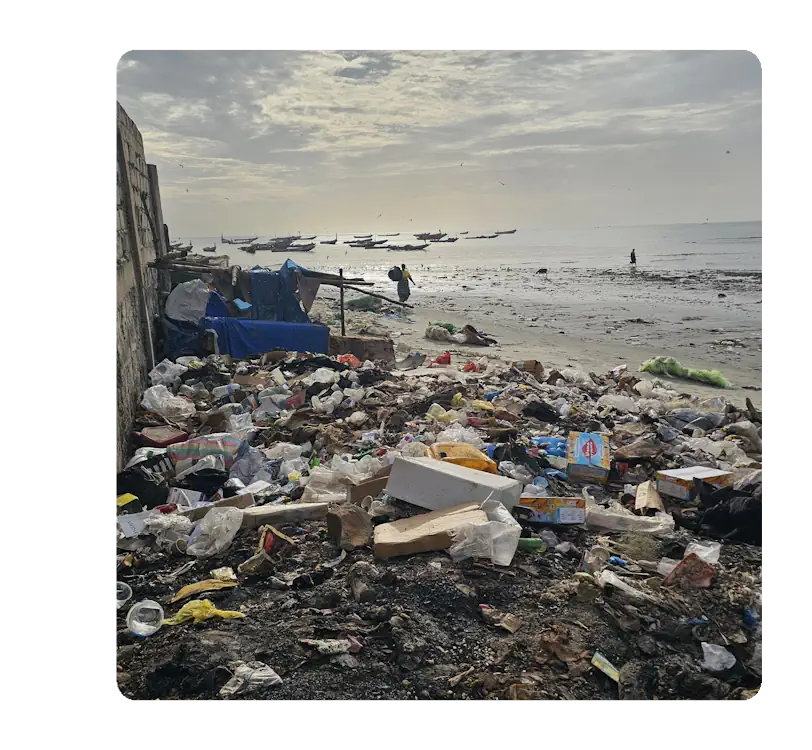
Plastic waste doesn’t disappear when there’s no formal waste management system. It accumulates in streets, wetlands, drainage channels, and informal dumping areas—and during rains it gets washed into waterways. The result is practical and immediate: higher flood risk, polluted public spaces, health exposure, and a visible decline in community well-being.
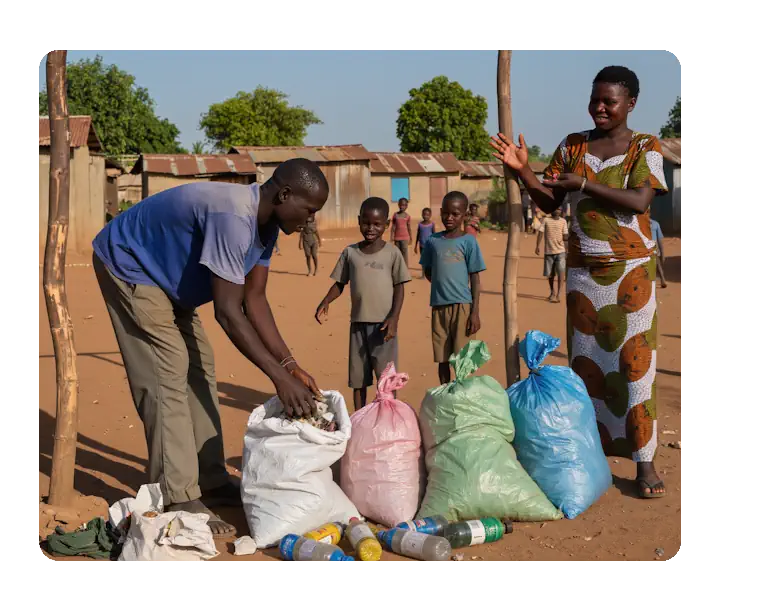
Our direction: We back community-led cleanup and sorting that turns an “invisible” problem into something trackable and manageable—collection actions, simple separation, and partnerships that create routines instead of one-off moments. Bamboo supports the long-term shift by enabling local alternatives and product pathways that reduce single-use dependency and keep value in the community rather than exporting damage to the environment.


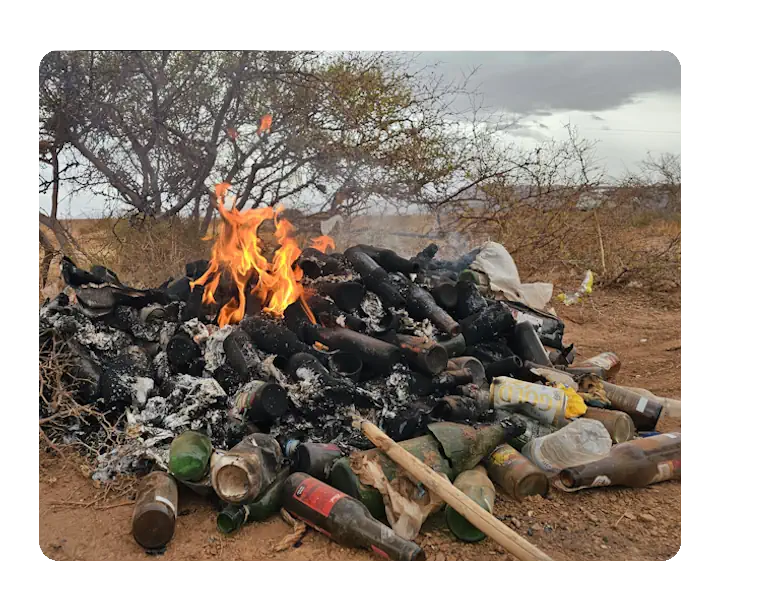
In many areas, there is no dependable pickup route, no consistent disposal management, and no accessible sorting points. When infrastructure is missing, people default to the only options available: dumping, burying, or burning—because daily life can’t wait for systems that don’t exist.
Our direction: We build practical stepping stones that can grow: community collection days, support for local collectors, and simple drop-off / sorting concepts that fit real conditions. For CSR partners, this is a clear entry point: equipment, logistics support, training, documentation, and scalable pilots that can be expanded with measurable milestones.


A major driver isn’t bad intention—it’s missing, usable information. Many households never receive simple, practical guidance on what mixed waste does to soil and water, what burning plastic releases into the air, or how to reduce everyday exposure—especially for children.
Our direction: We run education that respects reality: short, repeatable, community-friendly formats tied directly to actions people can actually take. Awareness only matters if behavior changes, so learning is linked to cleanups, safer storage/handling habits, and visible improvements people can feel in their own streets and homes.


When waste is burned in open air—especially mixed waste and plastic—the smoke becomes part of daily breathing. That isn’t theoretical. It affects children, older people, and anyone living near frequent burn points, and it normalizes a harmful “quick fix” because it seems like the fastest way to reduce volume.
Our direction: We reduce the need to burn by improving collection and separation and by reinforcing alternatives through community practice (not lectures). Clean air is positioned as a shared, everyday benefit: healthier homes, cleaner neighborhoods, fewer conflicts around smoke, and a stronger baseline for public health.


Many families depend on unstable, seasonal, or informal income. Women often carry the heaviest load—care work plus irregular work—while facing limited access to training, tools, capital, and reliable buyers for what they produce.
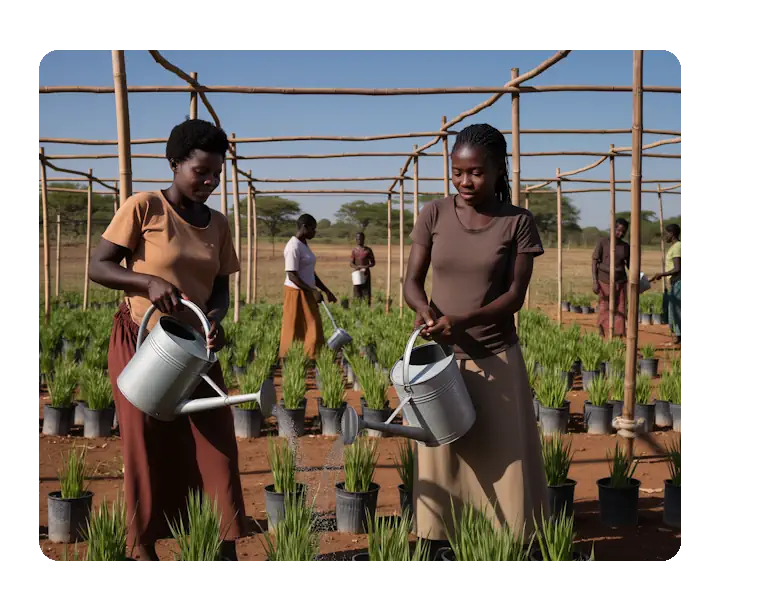
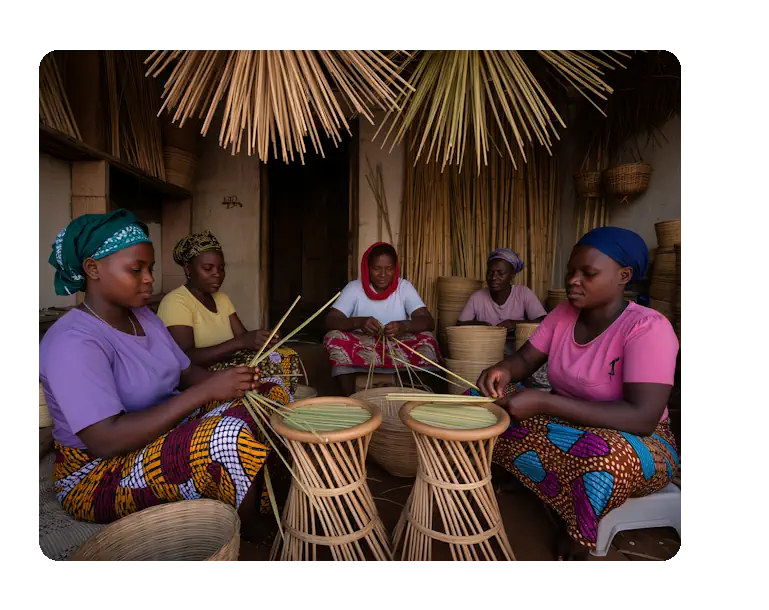
Our direction: We build income pathways tied to practical skills and real demand. Bamboo-based work can create structured, safer opportunities across the chain—nursery work, planting, maintenance, harvesting, basic processing, and product-making—designed so women can participate meaningfully, build confidence, and access more stable earning potential over time.


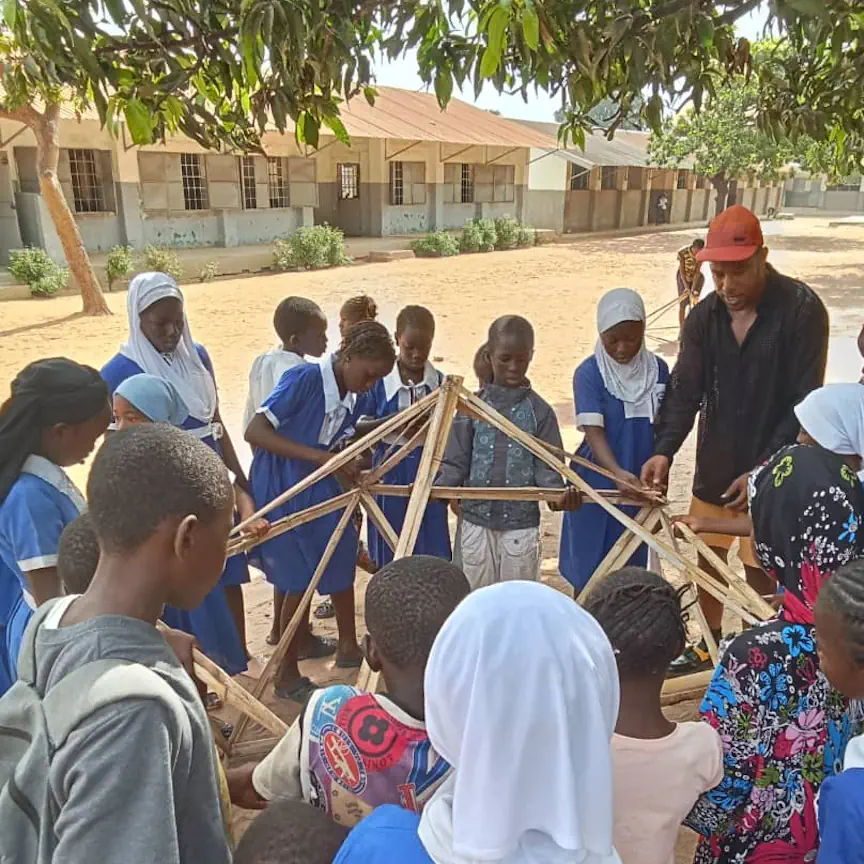
A young population without a clear bridge into work creates long-term pressure on families and communities. Even highly motivated young people can be blocked by limited training access, weak networks, and a lack of first-step opportunities that build reliability, teamwork, and real-world competence.
Our direction: We support hands-on, outcome-driven training that translates into roles and livelihoods—skills people can use immediately in community projects and micro-enterprise pathways. CSR partners can strengthen this fast through mentorship, equipment, scholarships, and structured cohorts with documented competencies and clear progression.


When affordable energy alternatives are limited, forests become fuel. This accelerates deforestation and habitat loss and creates a damaging loop: less tree cover leads to hotter microclimates, weaker soils, and greater vulnerability to extreme weather.
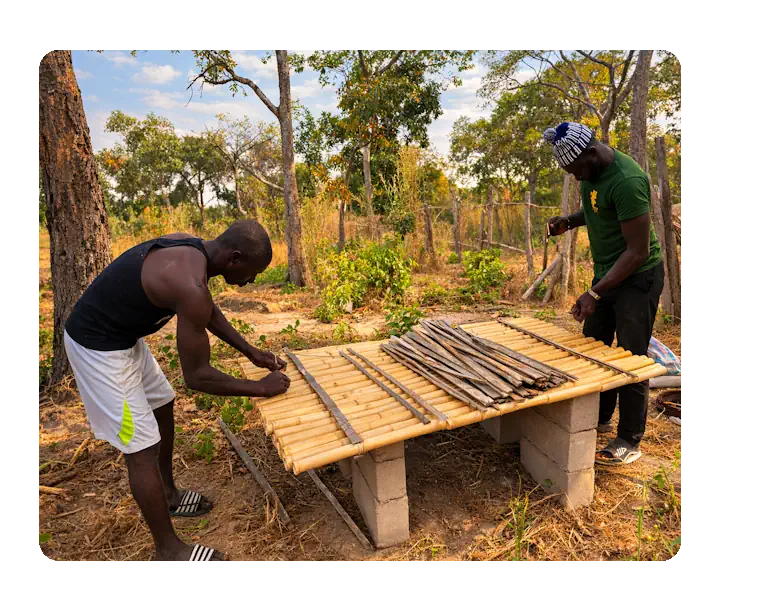
Our direction: Bamboo is not a magic replacement—but it can be a strong part of a wider solution as a fast-growing renewable material base with practical local uses. Implemented responsibly, with community buy-in and long-term stewardship, bamboo-based systems can reduce pressure on slow-growing trees and support more resilient land use.


Degraded soil reduces yields, increases erosion, and pushes families toward short-term coping strategies. Combined with erratic rainfall, heat stress, and flooding, productive capacity can drop faster than communities can recover—especially where land management support is limited.
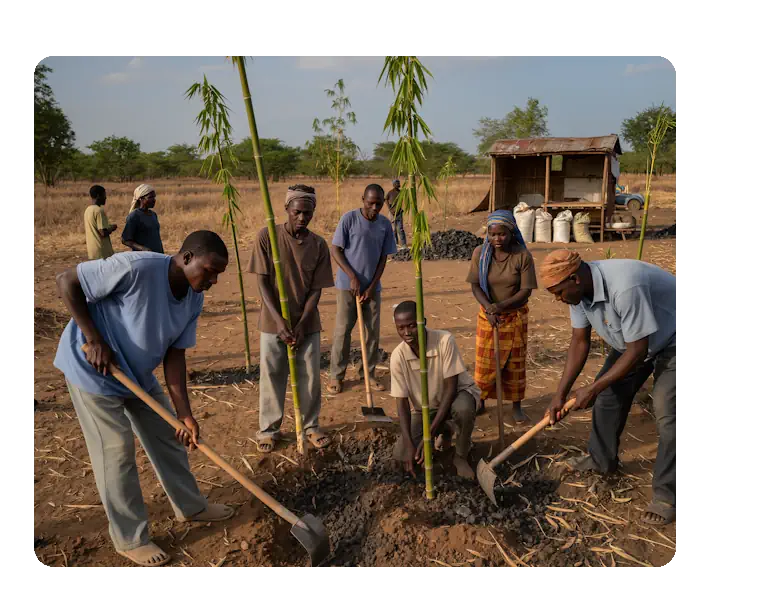
Our direction: We support land restoration approaches that are realistic for local conditions: stabilizing vulnerable areas, planting strategies that prioritize survival and maintenance, and long-term community ownership. Bamboo can help as a regenerative element—supporting soil stability and climate resilience when paired with good planning and consistent care.


Flooding isn’t only “weather.” When drainage channels are blocked with waste and the soil can’t absorb heavy rain, neighborhoods flood. Standing water increases health risks, damages property, and disrupts school and work—turning one storm into weeks of consequences.
Our direction: We connect environmental cleanup to public health and safety by reducing blockages, improving community routines, and supporting solutions that keep drainage and waterways clearer. For partners, this is high-impact work because the improvements are visible, measurable, and immediately felt at community level.


Even when people want to make better choices, the market often doesn’t support them. Sustainable products can be scarce, expensive, or import-dependent. Without local value chains, money leaves the community and “sustainability” stays a concept instead of becoming local capacity.
Our direction: We strengthen local production and local purchasing power step-by-step. Bamboo supports locally made alternatives and practical products—linked to training, quality basics, and micro-enterprise development. The goal isn’t perfect eco-marketing. It’s durable systems that keep value local and reduce dependence on costly imports.
Bamboo grows fast, regenerates after harvesting, and can be turned into practical products and income pathways much sooner than most timber trees. That means communities can see results earlier: nursery work, training, sustainable materials, and steady livelihoods.
By reducing plastic at the source. Bamboo can replace selected everyday single-use items and packaging, and it supports cleaner habits through education and community action — less litter, less burning, less plastic breaking down into micro- and nanoplastics over time.
We focus on systems that last: nurseries, hands-on training, local coordination, maintenance, and documentation. Many projects fail after the first “launch day” — we build the follow-up into the plan, so progress doesn’t disappear.
It funds the essentials that determine success: nursery materials, seedlings, training delivery, transport, ongoing care, and transparent updates. In simple terms: your donation becomes seedlings in the soil, skills in people’s hands, and cleaner communities that can keep the work going themselves.

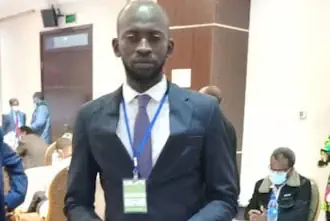
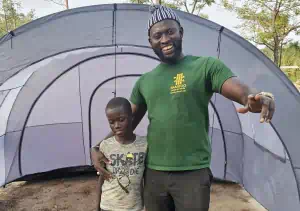
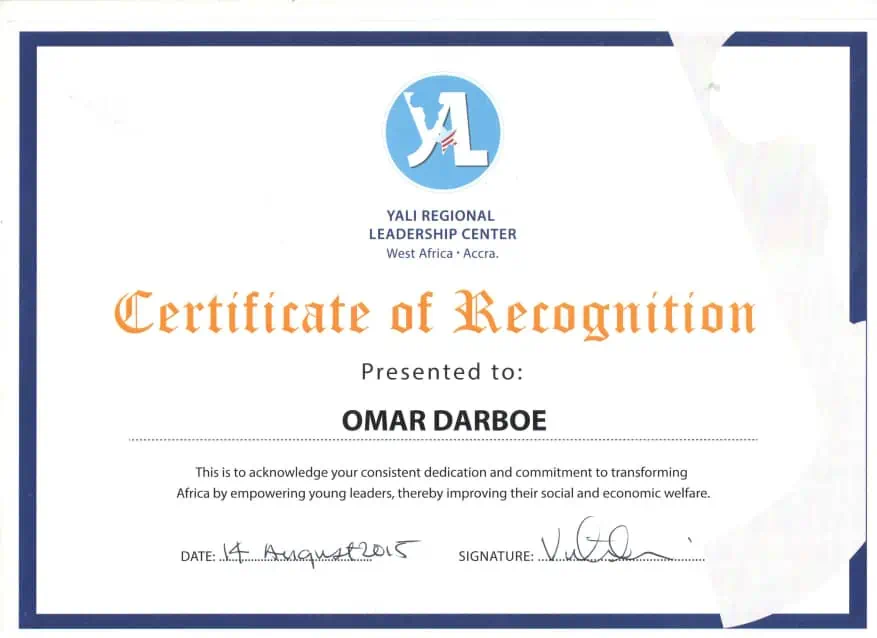
Omar Darboe participated in the Young African Leaders Initiative (YALI) leadership program, strengthening his skills in community development, environmental responsibility, and youth empowerment across West Africa.
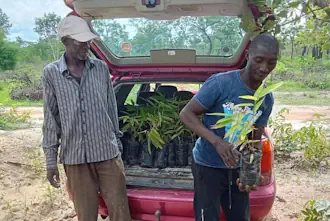
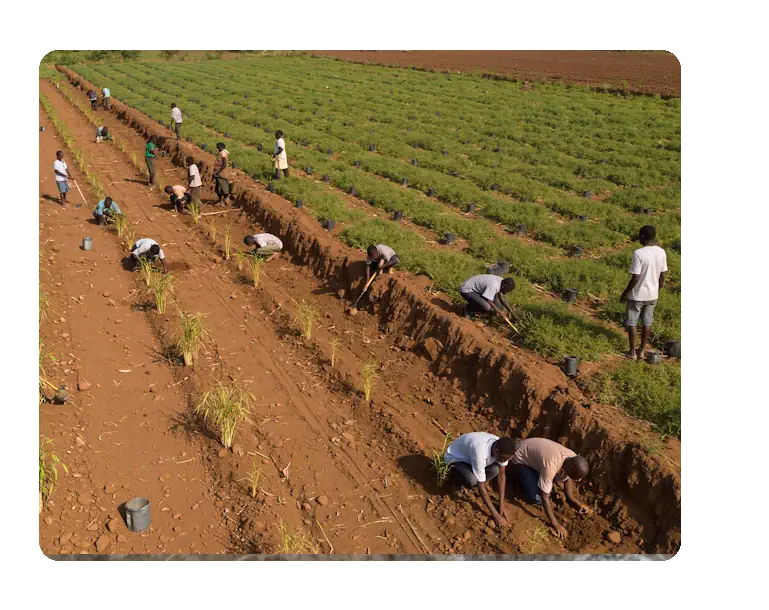
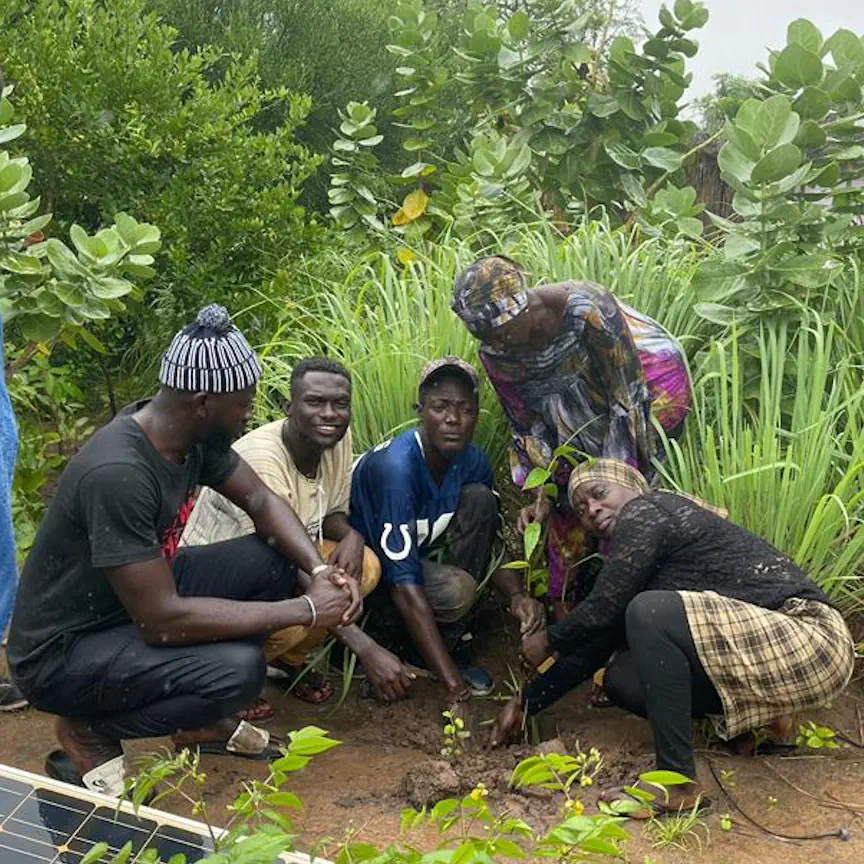
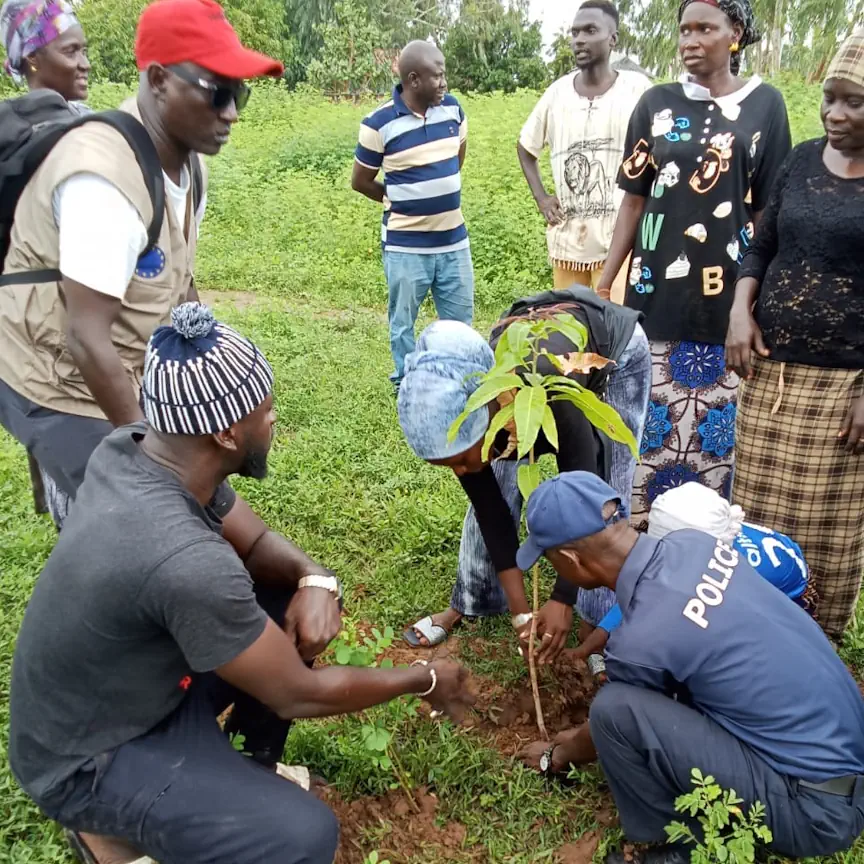
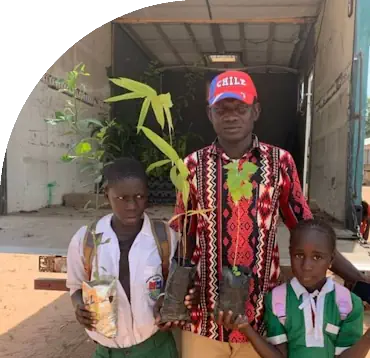
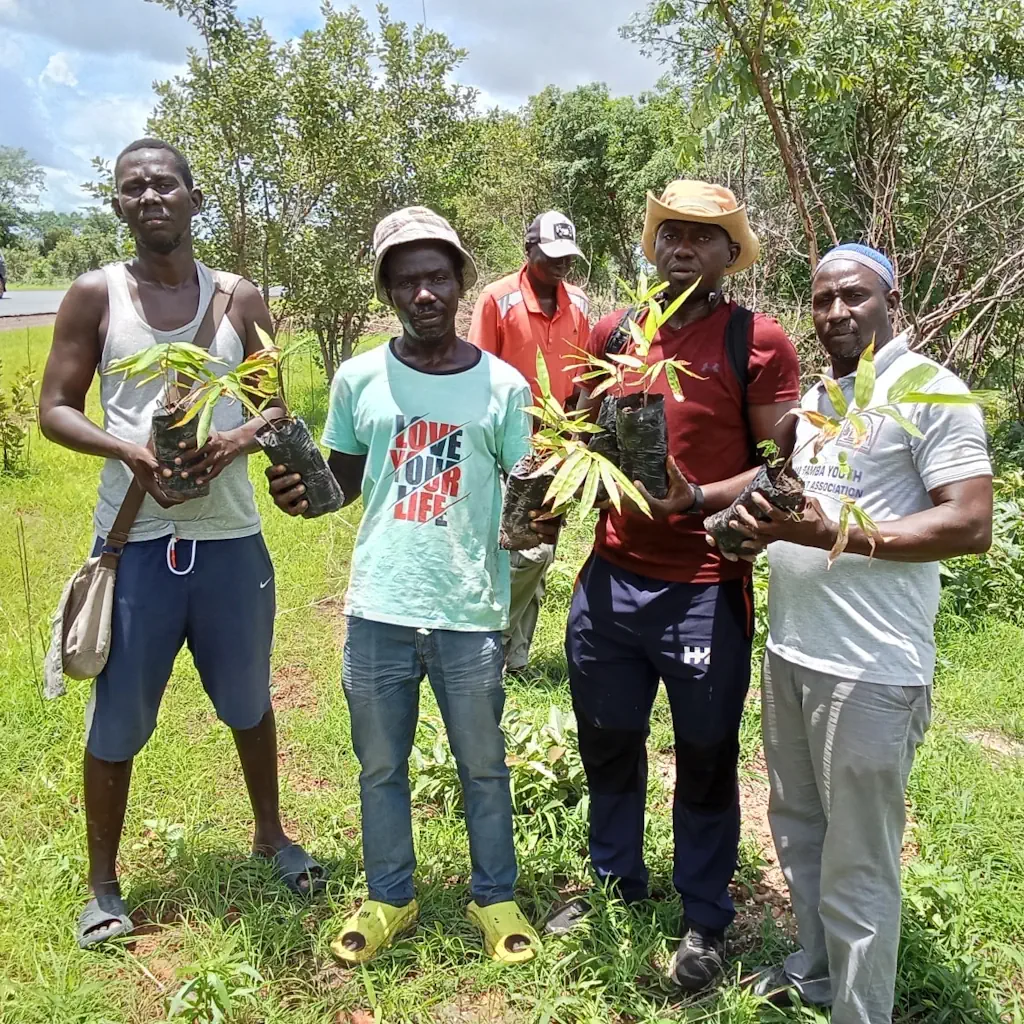
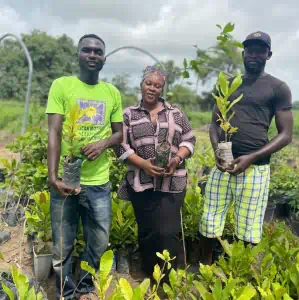
The bamboo seedlings are first raised and planted on our own farm, then distributed to local communities for planting and long-term stewardship.
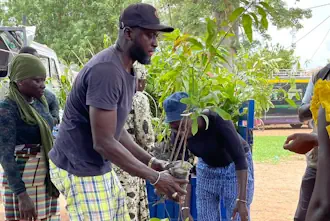
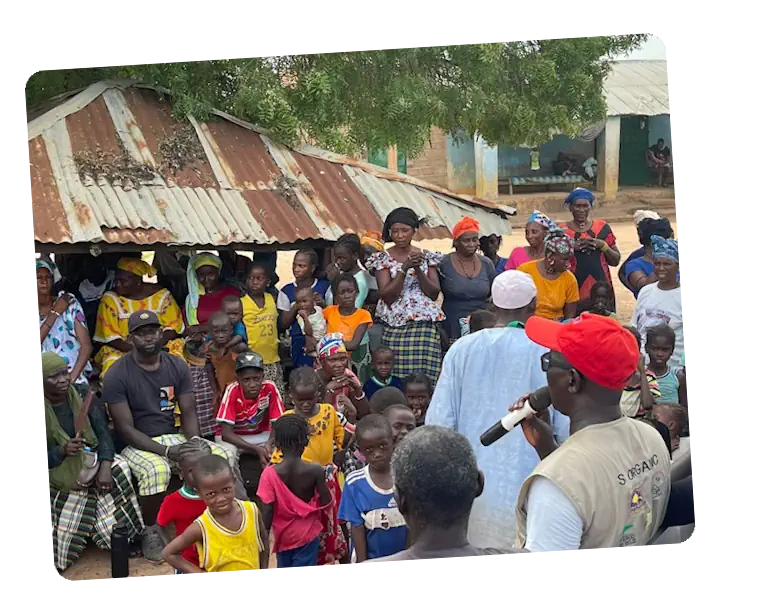
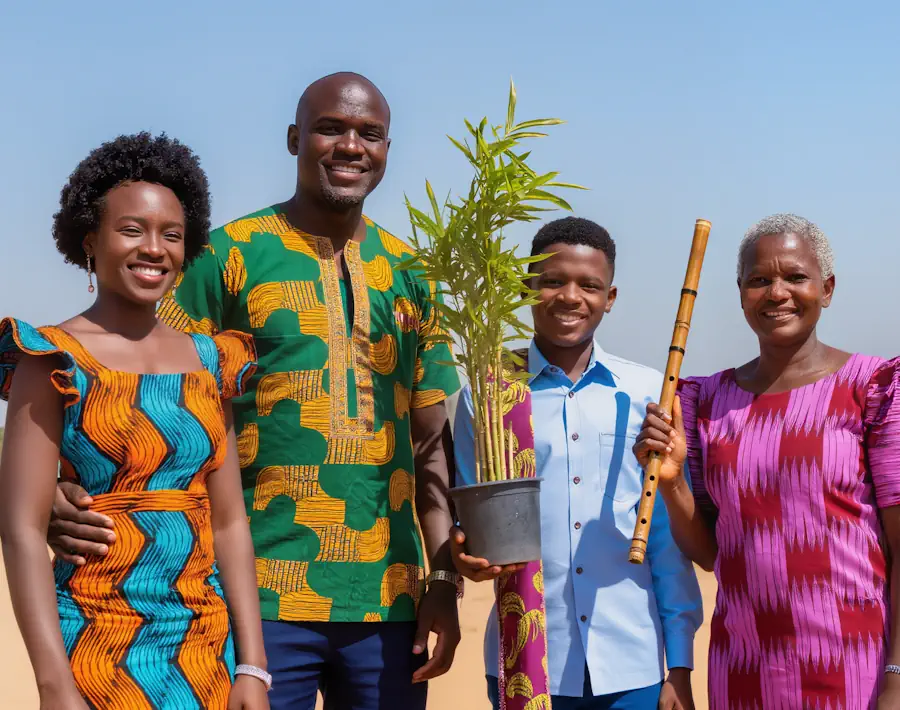
Omar delivering bamboo seedlings to families across Gambia.
WhatsApp us