



Situations
When affordable energy alternatives are limited, forests become fuel. Charcoal and firewood are not abstract topics — they are daily cooking, daily income, daily survival. But when cutting happens faster than regrowth, the landscape changes in ways that are hard to reverse: tree cover shrinks, habitats disappear, and land becomes more fragile year after year.
This is why deforestation is not only a “nature problem.” It’s a resilience problem. Less tree cover means hotter microclimates, weaker soils, less water held in the ground, and higher vulnerability to extremes — drought stress, erosion, and sudden flooding after heavy rains.
Our direction is realistic: bamboo is not a magic replacement — but it can be a strong part of a wider solution as a fast-growing renewable material base with practical local uses. Implemented responsibly, with community buy-in and long-term stewardship, bamboo-based systems can reduce pressure on slow-growing trees and support more resilient land use.
Why fuel pressure drives deforestation
Fuel demand stays high when households and small businesses depend on charcoal or firewood. If the only reliable energy source is “what the landscape provides,” cutting becomes the default system.
Typical drivers:
- limited affordable alternatives for cooking energy
- income pressure (charcoal as quick cash)
- weak management or protection of regeneration areas
- population growth and rising demand
- land use change that reduces natural regrowth
Telling communities to “stop” without workable alternatives doesn’t solve the problem. It simply shifts the pressure to the next forest patch — or the next family.
The damaging loop: less trees → weaker land → more pressure
Deforestation becomes dangerous because it triggers a feedback loop.
1) Hotter microclimates
Trees reduce heat and wind and provide shade. When they disappear, heat stress rises for people, livestock, and crops — and daily life becomes harder.
2) Weaker soils and erosion
Roots hold soil, leaf litter protects the ground, and organic matter builds structure. Without cover, rain hits harder, runoff increases, and fertile topsoil is lost.
3) Less water held in the landscape
Healthy vegetation supports infiltration and soil moisture. Reduced cover often means more runoff, less infiltration, and faster “flash flooding” followed by dryness.
4) Higher vulnerability to extreme weather
When rain becomes erratic, degraded land swings harder between drought stress and flood damage. Families lose productive capacity faster than they can rebuild it.
The hard truth: charcoal is also an income pathway
Charcoal isn’t only fuel — it’s money. For many households, it’s one of the few accessible cash options, especially when other income opportunities are unstable. That’s why responsible solutions must protect families economically while reducing pressure on slow-growing trees.
A realistic approach does two things:
- reduce fuel-driven pressure on forests, and
- build alternative pathways that people can actually maintain.
Our direction: bamboo as part of a wider solution (no greenwashing)
Bamboo can help because it grows faster than many trees and can provide usable biomass and material — but only if it is planned, managed, and maintained.
What bamboo can realistically contribute
- a renewable material base for practical local uses
- a managed biomass source that can reduce pressure on slow-growing trees
- land stabilization benefits where cover and roots matter
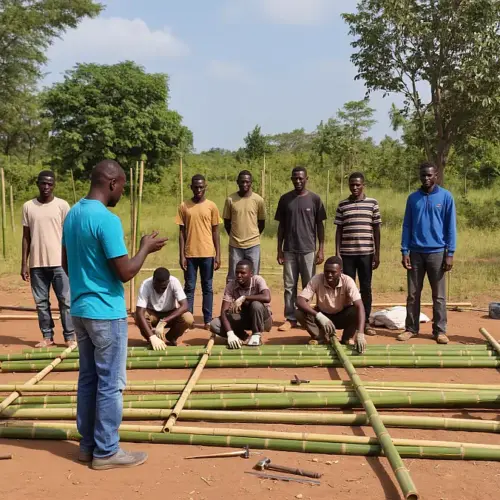
- local work roles across a chain (nursery, planting, maintenance, processing, products)
What bamboo should never be framed as
- a substitute for protecting native forests
- a “plant it once and it works forever” solution
- a one-size-fits-all crop planted everywhere
- a shortcut that ignores maintenance and governance
Bamboo is strongest as a designed system — matched to local conditions, owned locally, and maintained long-term.
What “responsible implementation” actually means
Planting is the easy day. Stewardship is the hard year.
Responsible systems require:
- the right locations (land use fit, no conflict with food needs)
- community agreement on ownership, access, and harvesting rules
- protection in early growth (fire, grazing, accidental damage)
- maintenance routines and replacements where needed
- harvesting guidelines that preserve regeneration
- a realistic use pathway so bamboo becomes valuable enough to protect
If these elements are missing, plantations fail quietly: survival rates drop, maintenance stops, and pressure returns to forests.
How we turn this into a workable program
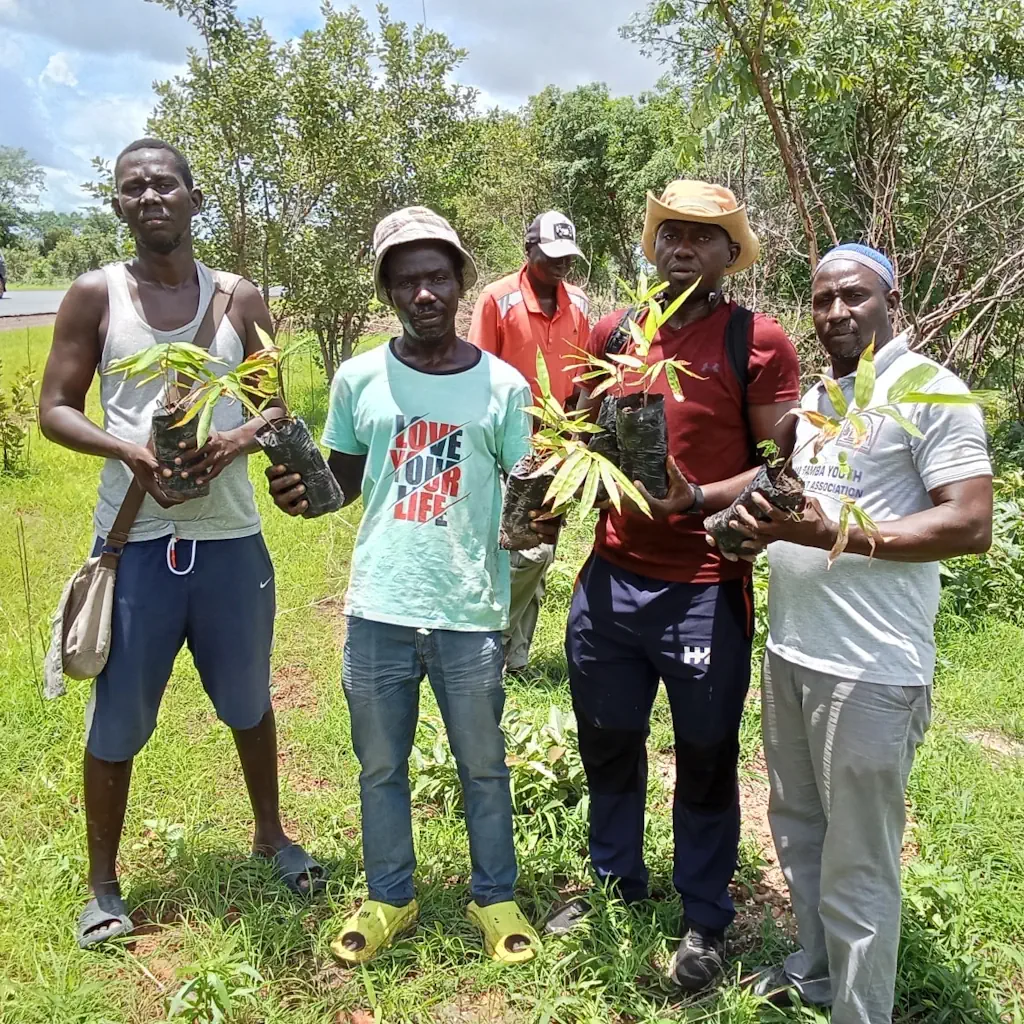
At Bamboo Foundation Gambia we focus on stepping stones that can run under real conditions:
1) Nurseries and strong seedlings
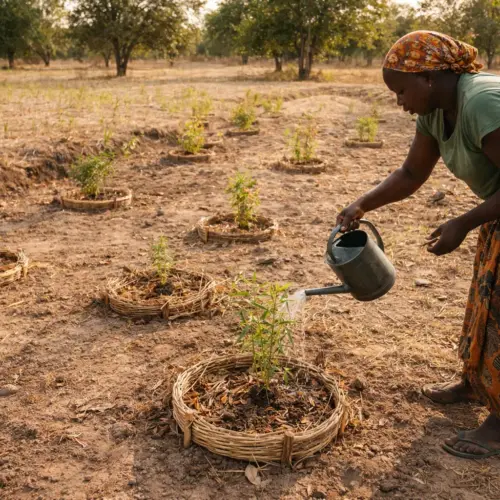
Good seedlings raise survival rates and reduce wasted effort. Nurseries also create structured work roles and early ownership.
2) Planting paired with stewardship routines
Planting is linked to “who maintains what.” Simple schedules, assigned roles, and local coordination keep it alive beyond the first week.
3) Managed use pathways
Bamboo becomes sustainable when it is used responsibly and generates practical value — local applications first, and income pathways where demand exists.
What we measure (so progress is real)
We track what actually indicates resilience:
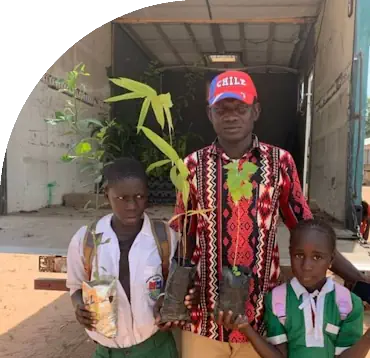
- seedlings raised and distributed
- planting areas and survival rates (quality indicator)
- maintenance routines completed (consistency indicator)
- local proxy signals of reduced fuel pressure in priority areas
- participants trained and active coordinators
- basic bamboo outputs created where demand exists
In restoration work, survival and maintenance matter more than “how many planted.”
How you can support (donors + CSR partners)
For private donors
Support the building blocks that make stewardship possible:
- nursery setup (shade, water access, materials)
- tools and basic protection for young plants
- training and community coordination
- transport for distribution and follow-ups
- maintenance support so planting survives
For CSR partners
This can be structured into measurable pilots:
- sponsor nursery + planting cohorts with survival-rate milestones
- fund stewardship coordination and documentation
- support maintenance toolkits and training
- build an impact reporting package (KPIs, photo logs, case stories)
The bottom line
When forests become fuel, deforestation is rarely a “choice.” It’s the result of limited options under daily pressure. Reducing fuel-driven deforestation requires systems that are practical, locally owned, and strong enough to last beyond a planting day.
And even if progress comes step by step, Bamboo Foundation Gambia is one small, practical way to move things forward — by building renewable pathways that reduce pressure on forests and strengthen land resilience over time.