Situations
Many families depend on unstable, seasonal, or informal income. A good week can be followed by a month of uncertainty. Prices shift, small opportunities come and go, and “steady work” is often the exception. In this reality, women usually carry the heaviest load: care work at home plus irregular income work — often without access to training pathways, tools, small capital, or reliable buyers.
This is not only an economic issue. It’s a resilience issue. When income is unpredictable, families can’t plan, invest, or recover quickly from shocks like illness, flooding, or poor harvests. And when women’s earning potential is limited, the whole household stability becomes weaker — because women are often the ones stretching resources, keeping routines running, and absorbing crisis pressure.
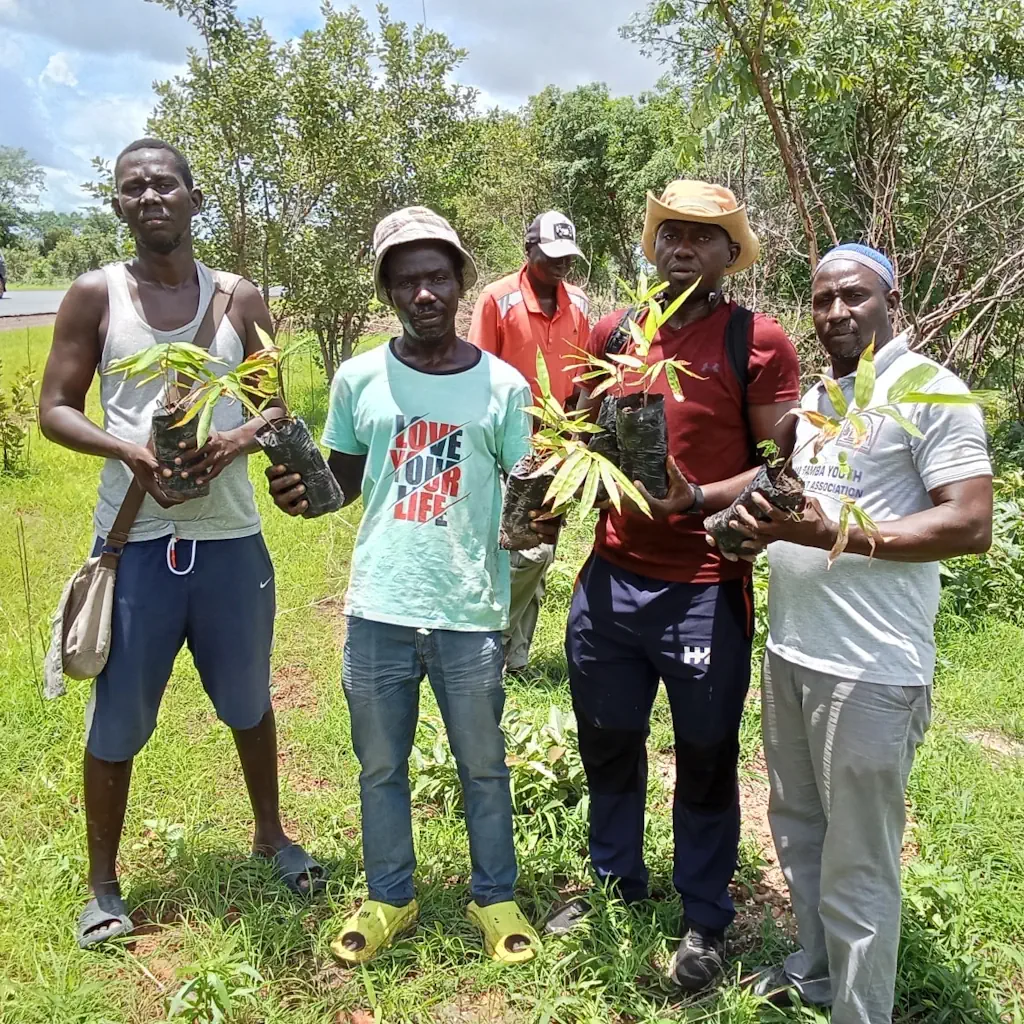
Our direction is practical: build income pathways tied to real demand and usable skills. Bamboo-based work can create structured, safer opportunities across a chain — nursery work, planting, maintenance, harvesting, basic processing, and product-making — designed so women can participate meaningfully, build confidence, and access more stable earning potential over time.
What “income instability” looks like in real life
Income instability isn’t just “low income.” It’s the constant uncertainty:
- irregular cashflow that makes budgeting impossible
- work that depends on season, weather, or luck
- income that disappears when childcare or illness hits
- small production without a buyer (effort without outcome)
- transport costs that swallow profit
That’s why “just start a small business” is not a solution by itself. Without a pathway and demand, it becomes another fragile hustle.
Why women are hit hardest (the barriers are structural)
Women face the same economic pressures as everyone — plus additional constraints that are rarely acknowledged in project design:
Time and mobility constraints
Care work and household responsibilities limit travel and training hours. If a program requires long sessions far from home, participation drops — even when motivation is high.
Limited access to tools and starting capital
Many opportunities are blocked by small things: basic equipment, safe storage, transport, or materials for the first step. Without these, productivity stays low and income stays inconsistent.
The hidden barrier: unreliable buyers
A woman can learn a skill — but if there is no predictable market link, income remains “maybe.” Real empowerment needs buyer logic, not just training.
Safety and physical strain
When options are limited, women accept unsafe or exhausting work. A good pathway reduces risk, protects dignity, and creates roles that don’t require heavy physical labor to be viable.
The difference between an “activity” and a real income pathway
Many projects offer activities. Fewer build pathways.
A real pathway has five essentials:
- A clear entry point (beginner-friendly, low barrier)
- Repeatable tasks (simple routines people can sustain)
- Progression (beginner → skilled → coordinator/lead)
- Basic tools + support (small inputs that unlock reliability)
- Demand linkage (buyers or practical use-cases that persist)
If one piece is missing, income returns to unstable patterns.
Our direction: bamboo-based work across a practical chain
Bamboo is useful because it offers multiple roles — not just one “product.” That matters because women’s availability, location, strength, and time vary. Inclusion is easier when there are different entry points.
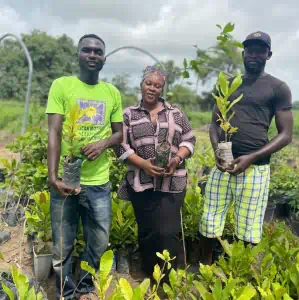
1) Nursery work: the safest, most structured entry point
Nursery roles are ideal for stability:
- routine tasks (watering, spacing, basic care)
- fast learning curve and visible progress
- safer environment and predictable workflow
- quality control is possible (strong seedlings = strong outcomes)
Nursery work also builds pride: people see something growing because of their care.
2) Planting + maintenance: continuity, not just a planting day
Planting creates moments; maintenance creates results. This is where programs succeed or fail.
Maintenance roles can include:
- protection, weeding, basic care schedules
- monitoring survival and replacements
- community coordination and stewardship routines
This stage is perfect for women in organizer roles because it rewards consistency, reliability, and communication.
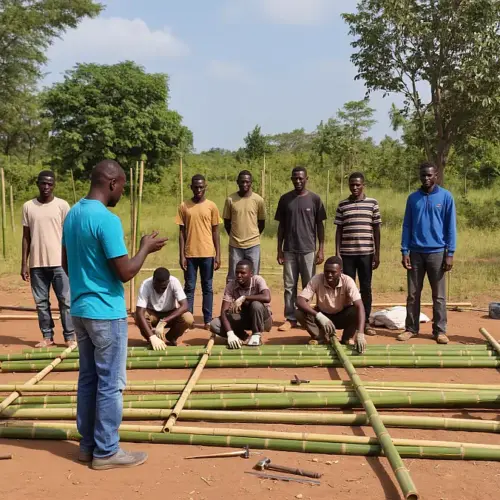
3) Harvesting + basic processing: moving from raw to value
As bamboo matures, basic processing is the bridge to higher-value outcomes:
- sorting, bundling, drying
- simple treatment where feasible
- preparing material for practical use
This is where training and small tools have a big impact on quality and repeatability.
4) Product-making: only where demand is real
Products should be chosen by demand, not by “what looks nice.” Reliability beats variety.
Examples that often make sense:
- durable baskets and carrying solutions (reducing single-use dependency)
- simple household goods that replace low-quality plastic items
- basic functional pieces where skills and tools support quality
The rule is simple: sell fewer items consistently rather than many items once.
Designing women’s participation on purpose
Participation doesn’t “happen.” It’s built into the program.
We prioritize:
- short, repeatable training sessions (time-realistic)
- safe work setup (PPE, task design, clear roles)
- roles that allow progression (beginner → skilled → coordinator)
- recognition and visibility (confidence matters in retention)
- market logic (buyer links or practical local demand)
This is how “women included” becomes “women earning.”
What we measure (so empowerment is real)
We track outcomes that show whether a pathway is actually forming:
- women trained and retained over time
- number of paid workdays created across the chain
- outputs by stage (seedlings raised, planting days, maintenance routines)
- seedling survival rates (quality indicator, not vanity)
- repeat work signals (consistent roles, not one-off tasks)
- buyer repetition or consistent demand (where products are involved)
- women in coordination roles (continuity and leadership)
If these indicators improve, stability improves. If they don’t, we adjust — not just celebrate attendance.
How you can support (donors + CSR partners)
For private donors
You fund the practical basics that unlock stability:
- nursery setup (shade, water access, basic materials)
- tools and PPE for safer work
- training sessions and local facilitation
- transport support for planting and distribution
- small processing tools where feasible
For CSR partners
Partnerships can be built around clear deliverables:
- sponsor women-led nursery + planting cohorts (with KPIs)
- fund training + toolkits with documented competencies
- support a “women coordinators” pilot (roles, stipends, reporting)
- strengthen buyer links through procurement pilots or partnerships
- create an impact package (KPIs, documentation, brand-safe case stories)
The bottom line
Unstable income keeps families in survival mode. Women often carry the most responsibility — and face the biggest barriers to stable opportunity. Real empowerment isn’t a slogan or a one-time workshop. It’s a pathway that turns effort into predictable earning potential, step by step, with real demand and roles that fit real life.
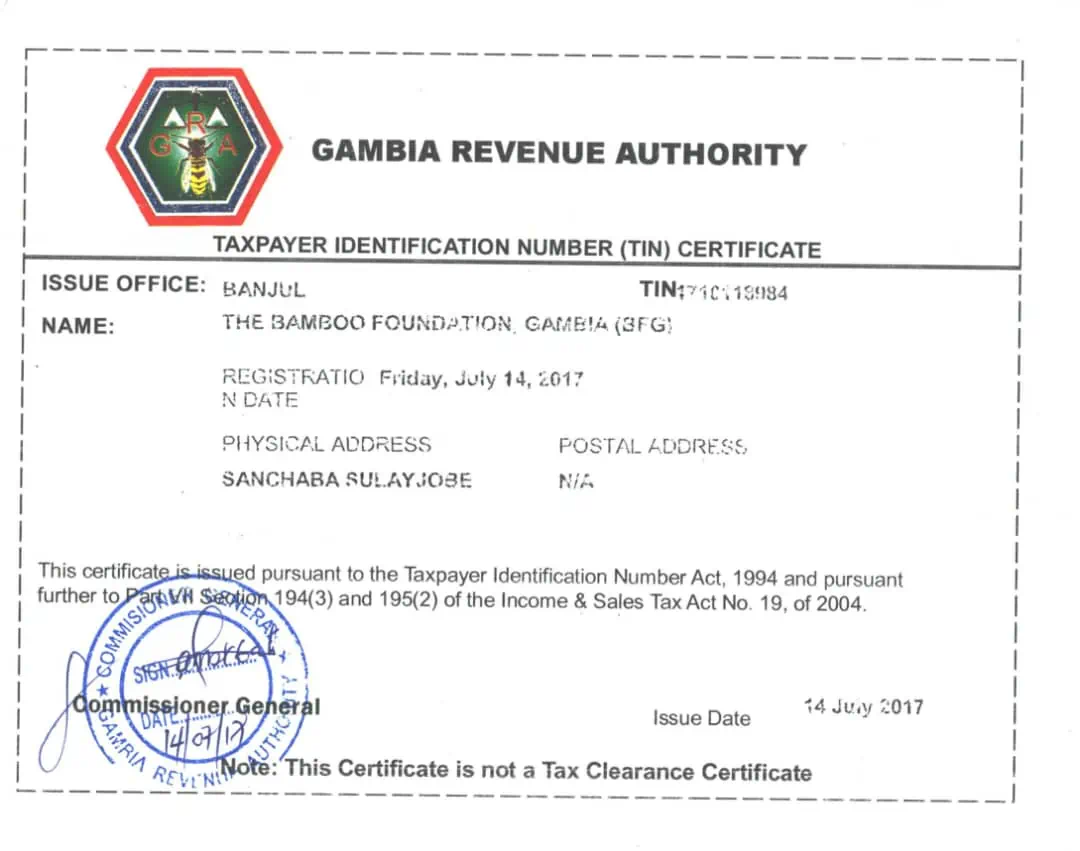
And even if progress comes gradually, Bamboo Foundation Gambia is one small, practical way to move things in the right direction — by building stability through skills, dignity, and local value creation.