


Situations
A major driver isn’t bad intention — it’s missing, usable information. In many communities, households never receive simple, practical guidance on what mixed waste does to soil and water, what burning plastic releases into the air, or how to reduce everyday exposure — especially for children. So people do what feels normal, what neighbors do, and what solves the immediate problem fastest.
This is why awareness can’t be treated like a poster campaign. It has to be practical knowledge that fits daily life — and it must be linked to actions people can actually repeat.
At Bamboo Foundation Gambia, we run education that respects reality: short, repeatable, community-friendly formats tied directly to behavior change. Awareness only matters if habits shift, so learning is connected to cleanups, safer storage/handling, and visible improvements people can feel in their own streets and homes.
Why risky habits become “normal”
When information is missing, risk doesn’t look like risk. It looks like routine.
Mixed waste: one pile, many problems
When food waste, plastic packaging, and chemical containers end up together, the pile becomes more than “dirty.” It attracts pests, creates contaminated runoff, and spreads into water paths during rain. Most families aren’t told a usable rule like: keep waste away from water flow and separate even one category consistently.
Burning: the fastest fix with the highest cost
Open burning is common because it reduces volume quickly. But burning plastics and mixed waste releases harmful smoke and particles. The exposure is close — near homes and children — and that’s why it matters so much.
Chemical use: small daily exposures add up
Cleaning agents, oils, pesticides, and other household chemicals are often stored low, reused in the wrong containers, or mixed without guidance. The biggest risk is not “one big accident.” It’s repeated small exposure — especially for kids.
Confusion blocks action
People hear “don’t burn” or “don’t litter,” but don’t get the “what instead.” If there’s no drop-off point, no routine collection, and no simple storage solution, advice becomes unrealistic — and gets ignored.
Why classic awareness campaigns fail
Many campaigns are designed to look good, not to change daily habits.
- slogans instead of steps
- one-time events instead of repetition
- shame instead of solutions
- advice that assumes options people don’t have
- no link between learning and visible improvement
Education only works when it becomes a routine that repeats — and routines form through practical relevance.
Our direction: education that leads to behavior change
We keep learning short, practical, and connected to action.
1) Micro-sessions people can remember
Short sessions beat long trainings. The goal is repeatability: the same key messages delivered many times in real places — near drains, sorting points, schools, and community hotspots.
2) “Do this today” rules (simple and realistic)
We focus on small shifts that reduce harm quickly:
- keep waste away from drains and water paths
- separate at least one category consistently (plastic vs. mixed is enough to start)
- avoid burning plastics near homes
- store chemicals high, closed, and away from children
- never reuse chemical containers for food or drinking water
Perfection is not the goal. Risk reduction is.
3) Learning linked to cleanups and visible wins
Education sticks when it produces a visible difference:
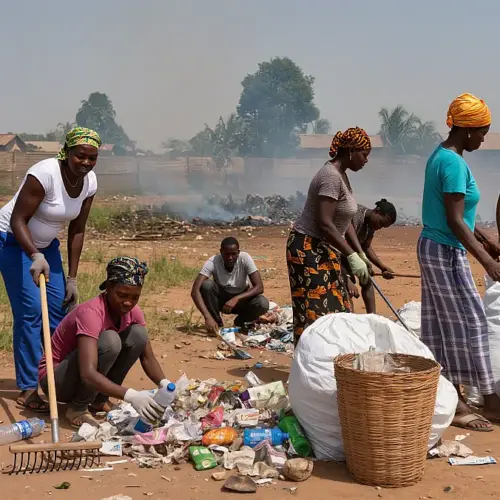
- cleanup days become training moments
- sorting points become teaching stations
- households see safer storage in practice
- children learn by seeing adults repeat the new habit
Visible improvement is the most powerful “teacher.” When the street corner stays cleaner, people believe change is possible.
What we teach (short, usable, respectful)
We keep it practical and non-preachy:
Safer waste habits
- keep waste out of water flow
- reduce re-scatter with simple storage
- make the “dumping corner” smaller, not bigger
- separate what you can, consistently
Safer air
- avoid burning plastics and mixed waste
- shift toward collection routines where possible
- reduce smoke exposure near homes and children
Safer chemical handling
- store high, closed, away from children
- don’t mix unknown chemicals
- don’t reuse chemical containers for food/water
- separate chemical waste when possible
How we measure change (not just attendance)
Attendance is easy to count. Behavior change is the real metric. We track signals that communities can maintain:
- number of micro-sessions delivered (and repeated)
- households reached in defined areas
- observed reduction of burning at priority points (spot checks)
- adoption of safer storage (simple checklist visits)
- increased separation at sorting points
- before/after documentation of recurring hotspots
- reduced re-scatter near drains and pathways
These indicators show whether knowledge is becoming routine.
Where bamboo fits (quietly, effectively)
Bamboo supports safer habits by making the “better choice” easier:
- bamboo shelves/baskets help keep items off the ground and out of children’s reach
- bamboo baskets and handling tools support cleaner sorting routines
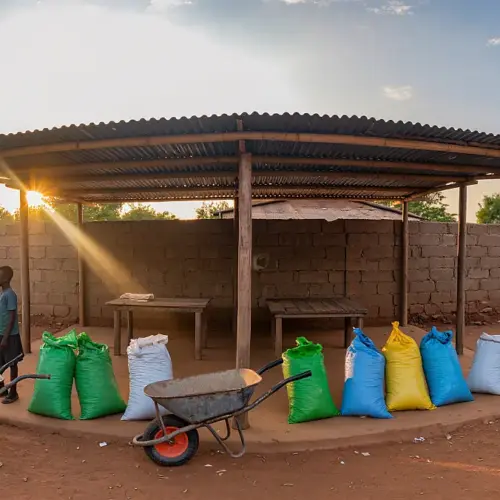
- bamboo shade structures create practical spaces for training and sorting
- bamboo livelihoods strengthen local capacity so routines can continue
No greenwashing. Just practical support.
How you can support (donors + CSR partners)
For private donors
Your support funds education that actually changes habits:
- simple visual guides (easy to understand, minimal text)
- facilitators and repeat sessions
- cleanup-linked learning days
- basic tools and storage that make safer choices possible
For CSR partners
This is a strong structured partnership area:
- sponsor micro-learning in defined communities
- fund “education + action” pilots (cleanup + sorting + household safety)
- provide equipment that enables behavior change (PPE, storage, sorting kits)
- support documentation and reporting (KPIs, photo logs, short case stories)
The bottom line
Risky waste and chemical habits persist when information is missing, options are unclear, and daily pressure is high. The solution isn’t slogans. It’s practical education that people can repeat — tied to real action and visible improvement.
And even if progress comes step by step, Bamboo Foundation Gambia is one small, practical path to move things forward — turning knowledge into routine, and routine into safer everyday life.