Situations
A young population without a clear bridge into work creates long-term pressure on families and communities. The issue is not a lack of energy or ambition — it’s a lack of pathways. Even highly motivated young people can get blocked by limited training access, weak networks, and too few first-step opportunities that build reliability, teamwork, and real-world competence.
When that bridge is missing, the cost compounds: frustration grows, families carry more financial stress, and communities lose momentum. At the same time, practical work still needs to happen every week — environmental cleanup routines, planting and maintenance, basic processing, logistics, and simple construction. The opportunity is obvious: if we connect youth to real work outputs, skills become visible, confidence grows, and the first income steps become possible.
Our direction is hands-on and outcome-driven: training that translates into roles and livelihoods — skills people can use immediately in community projects and micro-enterprise pathways. Partners can accelerate this with mentorship, equipment, scholarships, and structured cohorts with documented competencies and clear progression.
What the “skills gap” looks like on the ground
In many places, the gap isn’t “no education.” It’s “no practical proof” and “no structured practice.”
Typical blockers:
- limited access to tools and safe practice spaces
- no routine that trains reliability (showing up, finishing tasks, consistency)
- weak teamwork habits (communication, coordination, handovers)
- lack of quality standards (“good enough” vs. “not acceptable”)
- no documented evidence of competence (no portfolio, no verified tasks)
- few entry-level roles that teach real work rhythm
Young people often have motivation — but motivation alone doesn’t create employability.
The real bridge: from willingness → competence → proof → opportunity
Many programs deliver information. Fewer deliver employability.
Employability grows when training is:
- practical (real tasks, real tools, real constraints)
- repeatable (same core skills practiced until consistent)
- standard-based (clear “pass/fail” criteria and feedback loops)
- documented (proof that a participant can actually do the work)
- connected (linked to real roles, projects, and micro-enterprise steps)
That is the bridge we build.
Our model: structured cohorts + real outputs
We run training as a system, not as a one-off event.
1) Cohorts with clear tracks (so people don’t get lost)
Not everyone needs the same pathway. We structure simple tracks such as:
- Field Operations: cleanups, sorting routines, planting, maintenance
- Technical Basics: safe tool use, basic bamboo processing, simple construction
- Coordination & Documentation: planning, checklists, supervision, reporting
Each track has a starter level and a next level — so progress feels real.
2) Training tied to real community outputs (so skills become visible)
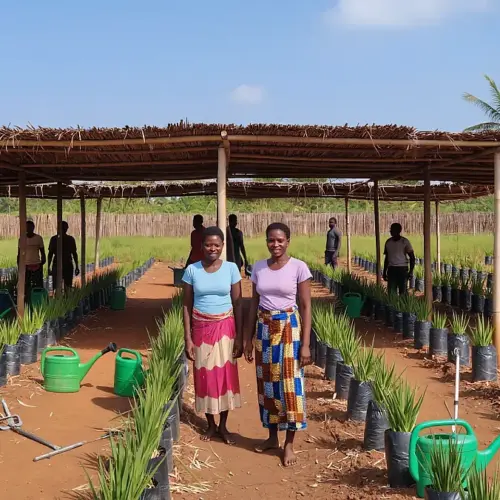
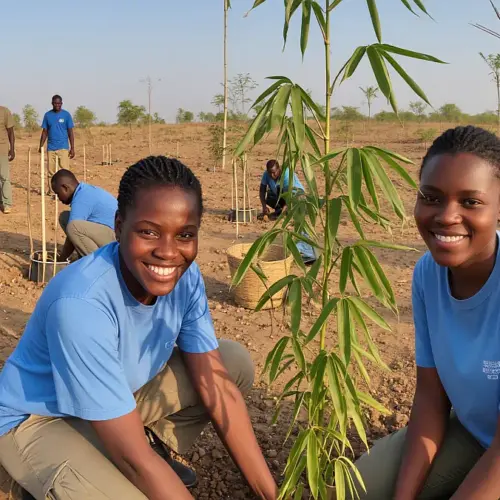
Instead of “practice for practice,” youth work on outputs communities need:
- cleanup logistics and sorting routines that repeat
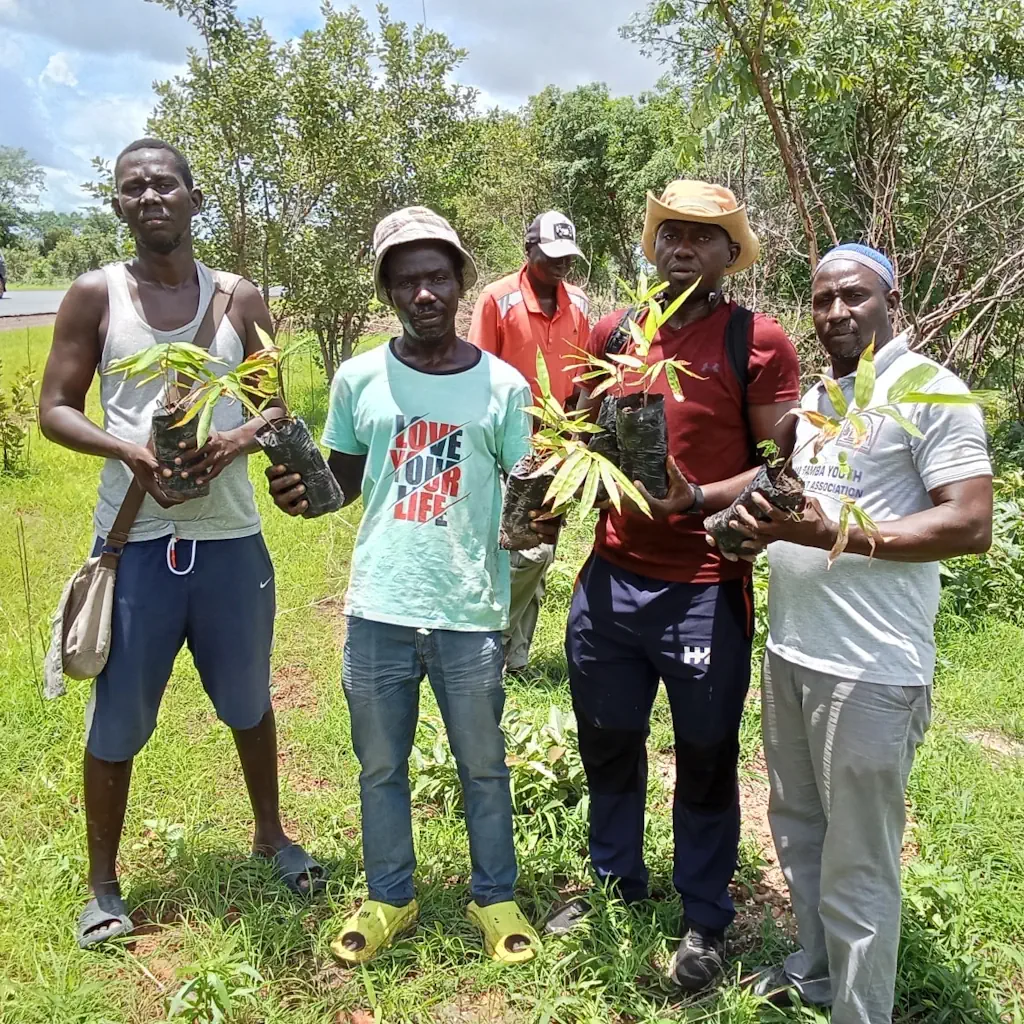
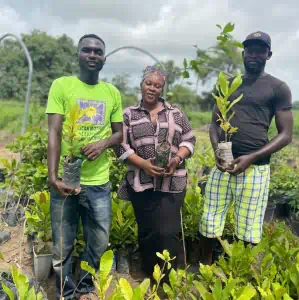
- nursery care and seedling handling
- planting and maintenance schedules that keep projects alive
- basic processing and quality control routines
- building simple structures (shade points, racks, storage)
This creates credibility: “I built this,” “I maintained this,” “I ran this routine.”
3) Documented competencies (proof that opens doors)
We keep documentation simple and credible:
- task checklists (with supervisor sign-off)
- photo evidence of completed outputs
- basic safety/tool handling verification
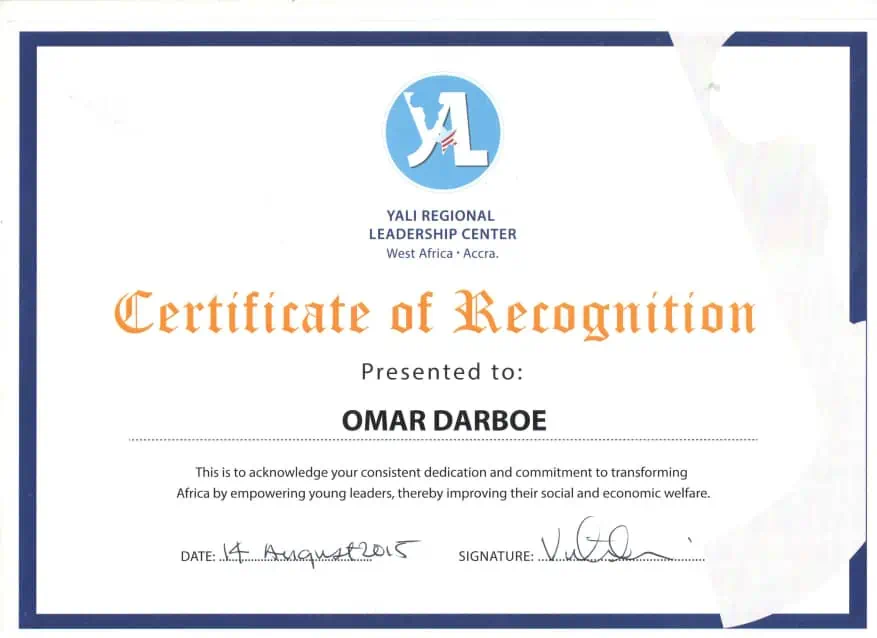
- short certificates tied to real tasks completed
- a mini-portfolio per participant (progress snapshots)
Documentation turns training into something that can be shown to employers, partners, and future buyers.
Why this strengthens communities, not only youth
A functioning youth pathway becomes “human infrastructure”:
- projects become consistent, not dependent on a few individuals
- local leadership capacity grows
- maintenance routines improve (the difference between success and failure)
- small systems (sorting points, nurseries, drop-offs) stay operational
- micro-enterprises become more realistic because skills and discipline exist
Youth skills are not a side topic. They determine whether community programs hold up over time.
How partners can accelerate this fast
A bridge to work strengthens quickly when support is practical:
- Tools & equipment kits: practice becomes real immediately
- Mentorship: feedback, standards, quality expectations
- Scholarships: enable attendance, transport, and continuity
- Structured cohorts: fixed start/end, clear milestones
- Documentation support: templates, checklists, simple reporting
These inputs don’t just “fund training.” They increase the probability that training becomes opportunity.
What we measure (so it’s not “training for training”)
We track outcomes that show whether competence turns into real progression:
- cohort completion and retention
- documented competencies achieved per track
- number and quality of real outputs delivered
- safety/tool competency verification
- progression into paid roles or micro-enterprise steps
- mentorship hours delivered and equipment access provided
- repeat participation (a strong indicator of real value)
This keeps the program honest: the goal is capability and opportunity, not attendance photos.
How you can support
For private donors
Support the practical basics that make training real:
- tools, PPE, and materials for practice
- local trainers and repeat cohorts
- transport support for project sites
- simple documentation so skills become proof
For CSR partners
Build a measurable, brand-safe “skills + outputs” partnership:
- sponsor cohorts with milestones and reporting
- provide equipment kits and safety gear
- fund mentorship and evaluation
- support internships/placements or buyer links
- co-create an impact package (KPIs, short case stories, documentation)
The bottom line
Youth unemployment is not only a jobs problem — it’s a pathway problem. The solution is a structured bridge: hands-on training, real outputs, documented competencies, and clear progression into roles and livelihoods.
And even if progress comes step by step, Bamboo Foundation Gambia is one small, practical way to move things forward — turning potential into competence, and competence into opportunity.